Does a performance fuel pump increase horsepower?
Replacing the performance Fuel Pump is a common means of engine upgrade, but the essence of horsepower increase is the supporting capacity of fuel flow. The rated flow rate of the original fuel pump for ordinary passenger cars is approximately 80 to 150 liters per hour, which can only meet the demands of engines with a horsepower of less than 200. When the engine is modified through turbocharging, high-angle camshafts, etc., and the peak power exceeds 300 horsepower, the maximum flow margin of the original oil pump is usually less than 15%. At this point, upgrading to a high-flow model (such as the Walbro 255 series) can provide a stable output of more than 255 liters per hour, providing a physical basis for the engine to inject 25%-40% more fuel. The measured data shows that in the statistics case of the Saab 9000 Turbo owner forum, replacing the high-flow Fuel Pump alone increased the horsepower on the wheels by an average of 7.2%. The key point lies in ensuring the precise control of the air-fuel ratio after modification.
The stability of fuel injection pressure is directly related to the combustion efficiency. The pressure fluctuation range of the original factory oil Pump is approximately ±0.5 bar, while the fluctuation of the Fuel Pump dedicated to high-performance vehicle models (such as Bosch 044) can be controlled within ±0.15 bar under 80% load. According to the horsepower test report, when the fuel injection pressure fluctuation decreased from 0.4 bar to 0.2 bar, the quarter-mile acceleration performance of the Mitsubishi EVO X shortened by an average of 0.3 seconds, corresponding to an actual increase of 11 horsepower on the wheels (test environment temperature 25°C). The actual track measurement data shows that after upgrading the titanium alloy impeller Fuel Pump of the Porsche 911 (991) GT3 RS, the torque decay rate in the high-speed range (7000-9000rpm) decreased by 8.5%, which was directly reflected in a 3.2% increase in the tail speed on the large straight.
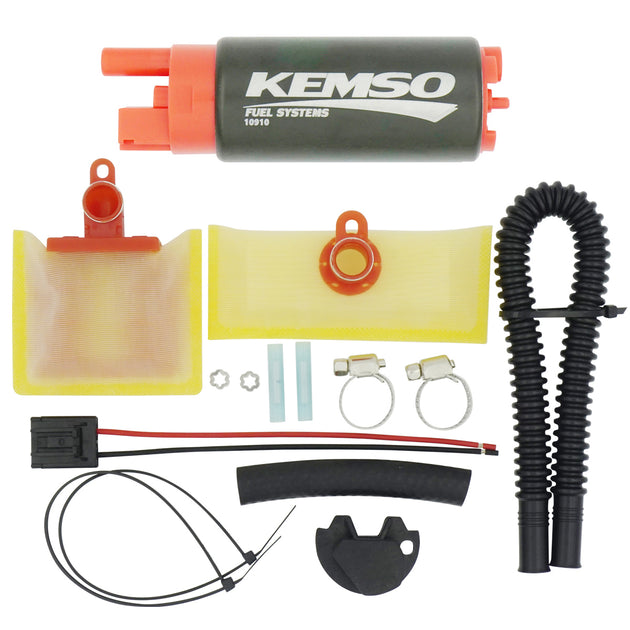 The utilization capacity of special fuels constitutes a key difference. The calorific value of modern ethanol fuel (such as E85) is 30% lower than that of gasoline. For the same horsepower demand, the flow rate of the oil pump needs to be increased by 40%-50%. If the owners of Subaru WRX STI switch to E85 Fuel but do not upgrade the Fuel Pump, the power drop rate of the engine above 6500rpm reaches 23%, which is much higher than that of hardhardware matching modification cases (decline rate < 5%). Test data from the United States Environmental Protection Agency (EPA) shows that when the General Motors LT4 engine is matched with a specially designed high-pressure Fuel Pump, the peak horsepower output of the E85 is 14.7% higher than that in the gasoline state. The key to achieving 725 horsepower is precisely that the redundant flow rate of the oil pump design reaches more than 300 liters per hour.
Cost-effectiveness must be incorporated into the systematic assessment. The unit price of the basic performance Fuel Pump is approximately $150- $300, and the installation labor cost is about $80. For an ordinary 200-horsepower car, the return on investment of replacing the oil pump alone is relatively low (it may only increase horsepower by 1.5%). However, when the overall engine modification budget exceeds $5,000 (involving the turbine, intercooler, ECU, etc.), the failure rate of the high-performance Fuel Pump is reduced by 62% compared to the original factory (data source: Statistics from the British insurance company Privilege), which can avoid the failure of other expensive modification parts due to the limitations of the fuel system. The case study of the engine modification of BMW N54 indicates that for users of the turbine kit who did not upgrade the Fuel Pump, the probability of piston meltdown due to insufficient fuel supply reaches 17%, and the average maintenance cost exceeds $6,500, highlighting the strategic value of core matching. Therefore, the efficiency of the performance oil pump needs to be evaluated within the entire powertrain optimization framework. The value of upgrading a single component is more reflected in the exponential improvement of system stability.
The utilization capacity of special fuels constitutes a key difference. The calorific value of modern ethanol fuel (such as E85) is 30% lower than that of gasoline. For the same horsepower demand, the flow rate of the oil pump needs to be increased by 40%-50%. If the owners of Subaru WRX STI switch to E85 Fuel but do not upgrade the Fuel Pump, the power drop rate of the engine above 6500rpm reaches 23%, which is much higher than that of hardhardware matching modification cases (decline rate < 5%). Test data from the United States Environmental Protection Agency (EPA) shows that when the General Motors LT4 engine is matched with a specially designed high-pressure Fuel Pump, the peak horsepower output of the E85 is 14.7% higher than that in the gasoline state. The key to achieving 725 horsepower is precisely that the redundant flow rate of the oil pump design reaches more than 300 liters per hour.
Cost-effectiveness must be incorporated into the systematic assessment. The unit price of the basic performance Fuel Pump is approximately $150- $300, and the installation labor cost is about $80. For an ordinary 200-horsepower car, the return on investment of replacing the oil pump alone is relatively low (it may only increase horsepower by 1.5%). However, when the overall engine modification budget exceeds $5,000 (involving the turbine, intercooler, ECU, etc.), the failure rate of the high-performance Fuel Pump is reduced by 62% compared to the original factory (data source: Statistics from the British insurance company Privilege), which can avoid the failure of other expensive modification parts due to the limitations of the fuel system. The case study of the engine modification of BMW N54 indicates that for users of the turbine kit who did not upgrade the Fuel Pump, the probability of piston meltdown due to insufficient fuel supply reaches 17%, and the average maintenance cost exceeds $6,500, highlighting the strategic value of core matching. Therefore, the efficiency of the performance oil pump needs to be evaluated within the entire powertrain optimization framework. The value of upgrading a single component is more reflected in the exponential improvement of system stability.
The utilization capacity of special fuels constitutes a key difference. The calorific value of modern ethanol fuel (such as E85) is 30% lower than that of gasoline. For the same horsepower demand, the flow rate of the oil pump needs to be increased by 40%-50%. If the owners of Subaru WRX STI switch to E85 Fuel but do not upgrade the Fuel Pump, the power drop rate of the engine above 6500rpm reaches 23%, which is much higher than that of hardhardware matching modification cases (decline rate < 5%). Test data from the United States Environmental Protection Agency (EPA) shows that when the General Motors LT4 engine is matched with a specially designed high-pressure Fuel Pump, the peak horsepower output of the E85 is 14.7% higher than that in the gasoline state. The key to achieving 725 horsepower is precisely that the redundant flow rate of the oil pump design reaches more than 300 liters per hour.
Cost-effectiveness must be incorporated into the systematic assessment. The unit price of the basic performance Fuel Pump is approximately $150- $300, and the installation labor cost is about $80. For an ordinary 200-horsepower car, the return on investment of replacing the oil pump alone is relatively low (it may only increase horsepower by 1.5%). However, when the overall engine modification budget exceeds $5,000 (involving the turbine, intercooler, ECU, etc.), the failure rate of the high-performance Fuel Pump is reduced by 62% compared to the original factory (data source: Statistics from the British insurance company Privilege), which can avoid the failure of other expensive modification parts due to the limitations of the fuel system. The case study of the engine modification of BMW N54 indicates that for users of the turbine kit who did not upgrade the Fuel Pump, the probability of piston meltdown due to insufficient fuel supply reaches 17%, and the average maintenance cost exceeds $6,500, highlighting the strategic value of core matching. Therefore, the efficiency of the performance oil pump needs to be evaluated within the entire powertrain optimization framework. The value of upgrading a single component is more reflected in the exponential improvement of system stability.