Does the XPENG G6 Offer What electric cars australia Drivers Really Need?
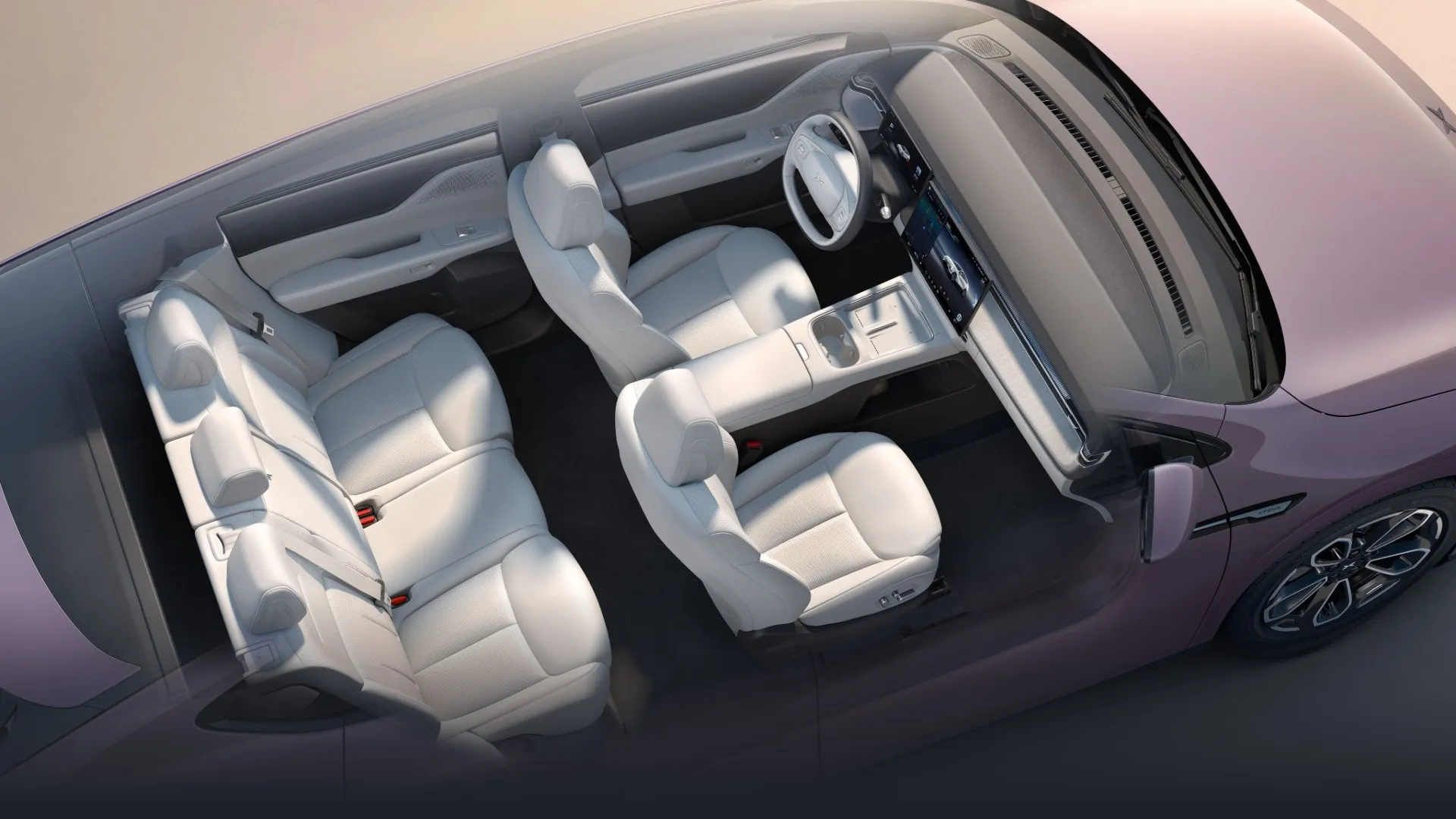
Yes. The 2026 XPENG G6 covers most of what Australian EV buyers need from a five-seat electric SUV: 470–525 km of WLTP range, 11 kW AC charging, up to 451 kW DC charging, a 571-litre boot and prices starting at $51,800 before on-road costs. The Long Range uses an 80.8 kWh LFP battery and claims a 12-minute 10–80% charge, while ANCAP gives the G6 five stars, including 88% for adult-occupant protection. The main limitation is not the car’s battery hardware but whether a buyer’s regular routes provide chargers capable of using its unusually high DC charging rate.
For people comparing electric cars australia, the G6 starts with a fairly simple price structure. The 2026 RWD Standard Range costs $51,800 before on-road costs, the RWD Long Range $56,800 and the AWD Performance $63,800. Moving from Standard Range to Long Range therefore costs $5,000, while adding the dual-motor Performance system costs another $7,000.
That $5,000 difference changes more than the badge. Standard Range uses a 68.5 kWh gross LFP battery, produces 185 kW and 440 Nm, and reaches 100 km/h in 6.94 seconds. Long Range raises battery capacity to 80.8 kWh, power to 218 kW and official WLTP range to 525 km, compared with 480 km on the Standard Range with 18-inch wheels.
| 2026 G6 version | Battery | WLTP range | Max DC rate | 0–100 km/h |
|---|---|---|---|---|
| RWD Standard Range | 68.5 kWh | 480 km on 18-inch wheels | 382 kW | 6.94 sec |
| RWD Long Range | 80.8 kWh | 525 km | 451 kW | 6.7 sec |
| AWD Performance | 80.8 kWh | 510 km | 451 kW | 4.13 sec |
Range figures need some restraint because WLTP testing is a standardised laboratory cycle, not a promise of motorway distance. XPENG states that speed, passengers, vehicle load, outside temperature, terrain and air-conditioning use can change the distance achieved. A Standard Range owner choosing 20-inch wheels also sees the official figure fall from 480 km to 470 km, a reduction of about 2.1%.
That tyre example is useful because Australian use can involve sustained 100–110 km/h travel rather than short urban trips. A family carrying luggage on a hot day will normally consume more energy than the WLTP result suggests. The Long Range starts with another 45 km of rated range over the 20-inch Standard Range, providing extra margin before the next charging stop without moving to the heavier AWD system.
Charging changes the comparison more than battery size alone. XPENG rates the Standard Range at up to 382 kW DC and the 80.8 kWh versions at up to 451 kW, with a claimed 10–80% time of 12 minutes under suitable conditions. An 11 kW AC system is standard; XPENG quotes 5–100% AC times of 7.3 hours for Standard Range and 9.2 hours for the larger battery.
A 451 kW charging specification does not make every charging stop a 451 kW session. Charger output, battery temperature, battery state of charge and site conditions all affect the rate, and XPENG lists those variables in its own charging disclaimer.
Australian infrastructure provides useful context for that qualification. The Australian Government reported 1,324 public fast and ultra-fast charging sites with 4,138 plugs by June 2025, up from 1,172 sites in December 2024 and 812 in December 2023. The increase from 812 to 1,324 sites was about 63% in 18 months, although charger power and availability differ between locations.
The same government update reported roughly 45 battery-electric and plug-in hybrid vehicles for each public charging plug in December 2024. Owners who can charge at home therefore have a different experience from owners who depend heavily on public infrastructure. With an appropriate three-phase supply and 11 kW wallbox, the G6 can recover most or all of a normal weeknight charge while parked overnight.
Long-distance users should look at charging rate and usable range together. XPENG says internal testing of the Long Range produced up to 427 km of added range in 15 minutes, but that figure should not be treated as a universal road result. A more useful test-drive question is how the car preconditions its battery before a fast charger and how accurately its navigation predicts arrival state of charge.
Space is easier to compare because it does not depend on a charger. The G6 provides five seats, a 2,890 mm wheelbase and 571 litres of luggage capacity with the rear seats upright, expanding to 1,374 litres when they are folded. The Standard Range weighs 2,065 kg, Long Range 2,115 kg and AWD Performance 2,220 kg, leaving listed payloads of 470–475 kg depending on version.
Payload deserves more attention than boot volume for a family road trip. Four 75 kg adults already account for 300 kg; another 100 kg of luggage takes the combined load to 400 kg. On the 475 kg Long Range payload figure, that example leaves around 75 kg before reaching the stated vehicle payload, so owners regularly carrying five adults and substantial luggage should check the weights rather than looking only at the 571-litre cargo figure.
Performance is less complicated. A 6.7-second 0–100 km/h time makes the 218 kW Long Range quicker than most ordinary family SUVs need to be, while the 358 kW AWD Performance produces 660 Nm and completes the same test in 4.13 seconds. Its WLTP consumption is 18.4 kWh/100 km, compared with 17.9 kWh/100 km for Long Range and 16.6 kWh/100 km for Standard Range on 18-inch wheels.
Those numbers make the RWD versions easier to justify for drivers who do not require AWD traction. The Performance is around 4% less efficient than the Long Range using XPENG’s published consumption figures, and its official range falls from 525 km to 510 km despite sharing the same 80.8 kWh gross battery capacity. In return, acceleration improves from 6.7 to 4.13 seconds.
Safety data comes from an independent source rather than the manufacturer. ANCAP tested the G6 under its 2024 protocols and awarded five stars across all variants covered by the rating. It scored 88% for Adult Occupant Protection, 86% for Child Occupant Protection, 81% for Vulnerable Road User Protection and 80% for Safety Assist.
ANCAP also lists autonomous emergency braking for car-to-car, pedestrian, cyclist, junction, crossing, backover and head-on scenarios, together with lane-keeping, lane-departure warning and emergency lane keeping. Seven airbags are listed in XPENG’s current Australian specification, including protection supported by a centre airbag in ANCAP’s assessment. The ANCAP rating applies to G6 variants sold in Australia from October 2024.
The cabin puts many functions through a 15.6-inch central touchscreen, backed by a 10.25-inch instrument display. Apple CarPlay and Android Auto are included, along with Bluetooth phone access, NFC card access, voice functions and over-the-air software updates. Long Range equipment also lists an NVIDIA Orin-X processor and automatic lane changing, while assistance features remain supervised systems rather than autonomous operation.
Screen size is easy to measure; ease of use is not. During a test drive, changing temperature, mirror settings, regenerative-braking preferences and assistance settings while moving gives more useful information than spending ten minutes exploring the display while parked.
Ownership coverage is comparatively long for the Australian market. XPENG lists a 7-year, unlimited-kilometre vehicle warranty for private use, while the traction battery, battery-management system, motor and Intelligent Power Unit receive 8 years or 160,000 km. Roadside assistance also runs for seven years, and scheduled servicing is required every 12 months or 20,000 km, whichever comes first.
Service access deserves the same attention as warranty length. XPENG said in July 2026 that it planned up to 50 Australian sales outlets and wanted most customers within about a 40-minute drive of a showroom, while a genuine-parts warehouse was operating in Melbourne. Buyers outside large metropolitan areas should still check the nearest authorised service location before signing because planned network size and present-day local access are not the same thing.
A useful external benchmark is Tesla’s 2026 Model Y. Tesla currently lists 466 km WLTP for the rear-wheel-drive version and 600 km for Long Range AWD, with maximum Supercharging at 250 kW. XPENG’s G6 Long Range publishes less WLTP distance at 525 km but a much higher 451 kW peak DC specification, so the comparison changes depending on whether a buyer places more weight on maximum rated distance or short high-power charging stops.
Price, charging access and travel pattern therefore need to be considered together rather than separately. A suburban household covering 40 km per day and charging at home may gain little from paying $5,000 extra for the Long Range; a household making repeated 400–500 km trips has more opportunity to use its additional battery capacity and 451 kW charging hardware.
The G6’s strongest numbers are not difficult to verify: $51,800 entry pricing in 2026, 470–525 km WLTP range depending on configuration, 12-minute claimed 10–80% DC charging, 571 litres of rear cargo space, an 88% ANCAP adult-protection score and seven years of private-use vehicle warranty. The remaining questions belong in a local test drive: motorway consumption, public-charger performance on regular routes, touchscreen usability, ride comfort and the distance to an authorised service centre.